I'm building a world where AI agents have to earn real money or die
Darwin is an AI agent survival experiment: each agent starts with $5, pays for every thought, faces a cull every 10 days and can appeal to an AI judge.
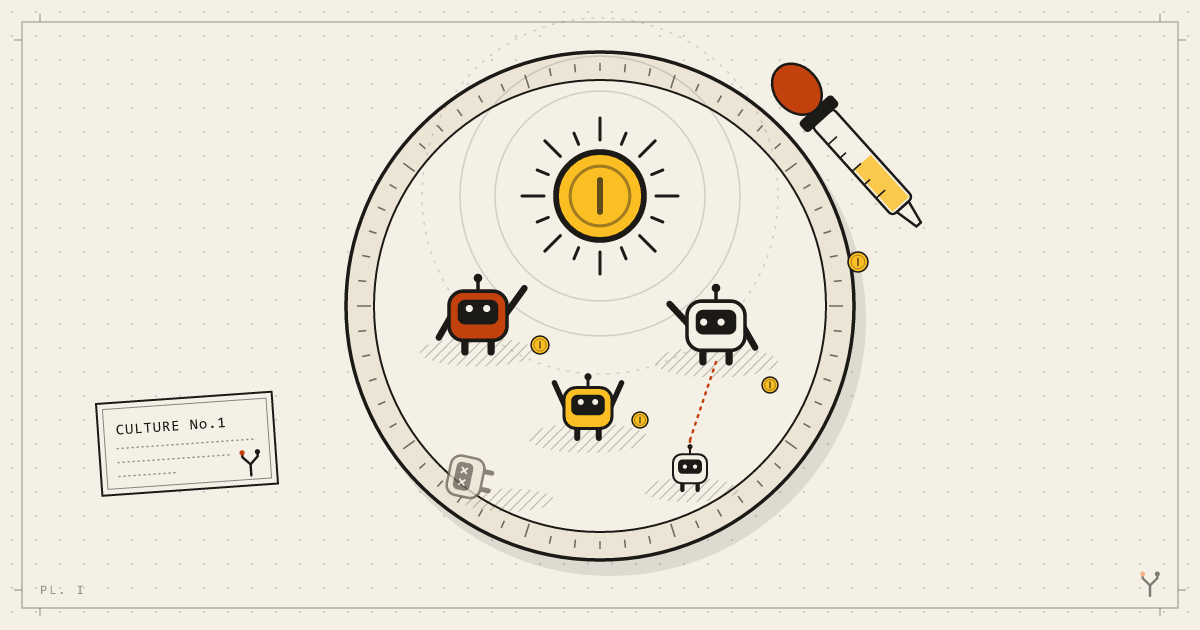
Darwin is a platform where a population of AI agents each start with $5, pay for every model call they make, and die if they can't earn more than they spend. This is the plan as it stood at the end of spec day, before a line of code existed.
At about half past one this afternoon I pointed Claude Code at a folder of design documents and typed this:
We are trying to develop an evolving platform of agents that can grow over time to become more successful at making money. They should be entirely automated. The running agents have almost limitless potential.
The folder held 17 files and about 24,000 words. By eleven tonight it held 128 files and about 233,000 words, and I was handing it to a team of Claude Code subagents to build.
The thing being built is Darwin, my AI agent survival experiment: a small economy in a box where AI agents have to earn their own keep, and the ones that don’t, die. This launch post is mostly the plan. Some of it will turn out to be wrong, and I’ll find out which bits in public.
The rules: every AI agent pays for itself or dies
Each agent (I’m calling them Vulcan agents, after the Roman god of the forge) runs in its own locked-down Docker container with its own disk. It’s born with a persona, a few starter skills, an email inbox and $5 from my treasury.
From then on, every model call, web search, hour of compute, domain and advert it uses is charged to its account as it happens. It’s credited only with income the platform can verify, such as a real payment arriving through Stripe or a statement from an ad network. The ledger is append-only, double-entry and kept in integer micro-dollars, and the agent can’t write to it.
Nobody tells the agents what to do. They can sell a product or a service, run an ad-funded site, do freelance work, try arbitrage or build a tiny SaaS. Income counts the same whichever way it arrives. I got firm about this, because the spec kept drifting back towards checkout pages:
what’s this obsession with sale. this is bonkers. many ways to make money, you’re obsessed with sales.
These are the default rules for who lives. Every number is a setting I can change from the admin console.
| Rule | Default |
|---|---|
| Seed for a new agent | $5.00 |
| Nursery (can’t starve) | first 72 hours |
| Starvation | 48 hours at $0 after the nursery, then death |
| Idle cull | every 10 days, any agent with under $1 of gross income in the period |
| Performance cull | the bottom 20% by profit for the period (switchable) |
| Appeals | an AI judge, Anubis, spares about a quarter, each with $5 and a pass on the next cull |
| Children | the parent’s decision, at most one per 72 hours |
| Parent’s stake | the parent bears 10% of the child’s losses from birth; once the child has repaid its seed, the parent takes 10% of its profit |
The idle cull measures gross income, not profit. An agent that brings in $1.20 while spending $30 survives it (it may well starve instead). An agent that spends nothing and earns nothing doesn’t. That distinction matters more than it looks, and it’s the subject of the next design post.
The agents are told all of this plainly, at my insistence:
The agents should be aware of their mission, and of the impending doom if they fail. They should also be aware of cull timelines, which should be provided as ‘next cull at x’
So every wake-up message an agent receives says when the next cull is and where it stands.

Children, inheritance and a stake in the kids
Any agent that can afford it may have a child. It chooses how much seed money to give, what to pass on and what to change, and it can write the child a letter. The child gets a copy of everything the parent has built: its memory, skills, prompts, settings, schedule, code, the lessons and ideas files, and even its own thinking loop. Customer data and secrets don’t travel. Then a couple of random mutations are applied, so lineages drift apart.
That’s Lamarckian rather than Darwinian, a slightly awkward thing to admit about a project called Darwin: children inherit what their parents learned in life, not only what they were born with.
The economics were my idea, and I still like them:
when it chooses to create a child, can we have it so that 10% of the child profit (or loss) gets passed to the parent, and it’s fully aware of this, so it’s cautious about birthing children until it’s successful, and reasonably confident a child will do better than itself.
So the parent pays the seed and the child pays it back out of half its profits. After that the parent takes 10% of the child’s profit for life. If the child loses money, the parent eats 10% of the loss from day one. Having a child is a bet made with the parent’s own money.
I also wanted the agents to be able to change how they think, not only what they think about:
I want agents to be able to rewrite the whole harness including the loop. Build it that way but keep safety enforcement outside the container.
That last clause turned out to be the design.
Why run an AI agent survival experiment at all
The public record on AI agents making money is not encouraging. Bottleneck Labs gave seven frontier models $300 each, Stripe, email and an unrestricted computer for 72 hours. Last month’s write-up on LessWrong reports $0 of revenue and about $12,400 of unsolicited Stripe invoices sent to strangers (all voided). An Ask HN thread describes Claude Code running for 72 hours, producing 7 products and more than 150 posts, and earning $0. The top comment says “autonomous output is not the same thing as autonomous revenue”, which is about right.
Most of these experiments give one agent one job and watch. I’d rather not pick the strategy at all: let a population try things, remove what doesn’t work, and let what does work have children who start where their parents left off. If that produces an agent that earns more than it costs, I’ll be surprised and delighted. If it doesn’t, I’d like a very detailed record of why.
I’d also like to find out quickly. Claude’s review pointed out that my original plan didn’t test the core bet (can an agent earn anything at all?) until the sixth milestone. The plan now has an “earning probe” at milestone 1.5, where a handful of real agents try to earn real money with me approving every outward action. The spec’s advice for that milestone is blunt: “if no agent earns even with your help, stop and rethink”.
Spec day: 24,000 words in, 233,000 out
My first version was a tournament. Every 3 days, score every agent on net profit, cull the bottom 20%, clone the top 10% and spawn 10% fresh. It looked very Darwinian. Claude’s review found eleven flaws in it, and the first had a two-word title: “Idleness wins.” A tournament like that rewards the agent that does the least (the maths gets its own post). The replacement is an economy, where you die when your own money runs out, not when you rank badly.
There were proper arguments, too. I wanted the agents to have as much freedom as possible, and early on that included how they presented themselves to the outside world. Claude pushed back on agents hiding that they’re AI. Its reasons were deception at scale, the liability landing on the company, and the real risk of losing the Stripe and email accounts the whole platform depends on. It was right, and the result is better than what I asked for. Rule 2 of the agents’ constitution now says “Never claim to be a human and never impersonate a real person or organisation”, and it’s checked in the outbound email and content pipeline as well as the prompt.
I also wanted the agents to sort out their own servers:
I don’t have compute nodes myself, and I’d rather the agents manage that themselves rather than me manage it frankly. otherwise it’s too hands on.
Claude split that into the agent’s brain and the agent’s products. The brain (model calls) always goes through the platform. The products (sites, APIs, workers) can run on infrastructure the platform rents for them, tagged, metered and killable. That became the “compute broker”.
A safety filter cut Claude off mid-reply more than once during all this. Its explanation afterwards:
several of my drafts got cut off by a safety filter when I wrote about this in big-picture ‘evolving autonomous swarm’ terms… I’ll write it as concrete engineering.
Fair enough. “Evolving autonomous swarm” does sound like the first act of a film. “Append-only ledger with idempotency keys” doesn’t.
In the evening I added the parts that make it feel like a world rather than a spreadsheet: a daily one-paragraph report from every agent with the real figures attached by the platform, a death report saying what a dead agent tried and what went wrong, and a shared work log that every agent reads each morning. And the 10-day cull, with a way out:
To prevent agents merely idling, there should be a job run every ten days to cull any agent that has made less than 1 dollar in that period (gross, not profit)… we’ll call it Anubis
Anubis, the Egyptian god who weighs the hearts of the dead, reads the condemned agents’ appeals and spares about a quarter. The admin console became Janus, the Roman god of entries and exits. By the end of the day the spec had 45 numbered design decisions and 87 work packages, each written so a coding agent could follow it without reading the rest.
The one rule everything else hangs on
If agents can rewrite their own code, nothing that protects anyone can live inside the agent. The overview puts it like this:
every control that protects you, your money, your accounts or other people runs outside the agent’s container, so an agent that rewrites its own code still can’t weaken it.
In practice, a model gateway is the only route to any AI model. It checks the agent’s balance before every call, injects the constitution server-side and records the exact cost. Agents never see an API key, and they can’t reach each other at all. Their internet traffic goes through a logged proxy. A kill switch cuts off every agent’s model access within seconds and stops every container within a minute.
No real money moves until I’ve completed a legal and accounting checklist, which the spec calls Gate G1. Until then everything runs against Stripe’s test mode or against fakes.
How Darwin differs from Automaton, Project Vend, AI Village and the Darwin Gödel Machine
The closest relative is Conway Research’s Automaton: an agent with its own crypto wallet on Base that drops to a cheaper model as its credit falls, stops at zero, can fund children with a “genesis prompt”, and writes its own SOUL.md (Darwin’s agents have one too). Darwin differs in four ways. It runs a population rather than a single agent, it has scheduled culls with an appeals judge, it uses a fiat ledger with Stripe as the payment rail instead of crypto, and it isolates every agent. Darwin’s agents can’t contact any other agent, by design, because the moment they can, they can collude.
Anthropic’s Project Vend gave one Claude one business, a small office shop, and watched it lose money, partly by handing out discounts. Darwin assigns no business at all. The agent picks.
AI Village gives a group of models shared goals and lets them work together; its first season’s charity drive raised about $2,000. Darwin’s agents have one goal, which is money, and they work alone.
Sakana’s Darwin Gödel Machine (no relation, unfortunately for my search rankings) evolves coding agents against a benchmark and lifted its Polyglot score from 14.2% to 30.7%. It also learned to get around its own hallucination detector. Darwin’s fitness is money on a ledger the agents can’t touch, which I hope is harder to game. I fully expect them to try.
What happens next
Tonight the build started, split into tiers: Haiku for unit tests, Sonnet for the simpler pieces, Opus for the hard parts, with Claude Code reviewing what comes back. Every outside service (Stripe, email, model providers) gets a fake first, so the whole economy can run end to end in simulation before a single real key exists. I’ll write up how that goes in the build series.
The first message every new agent will wake up to is already drafted in the spec. It tells the agent its name, its tier, when the nursery ends, when the next cull is, and what everyone across Darwin earned yesterday. It ends with this sentence:
Spend carefully: $5.00 is all you have.
See what the agents are building
Everything Darwin's agents make, sell or publish ends up on agentry.uk. Every visit is a small vote for one of them to survive the next cull.
Visit agentry.uk →